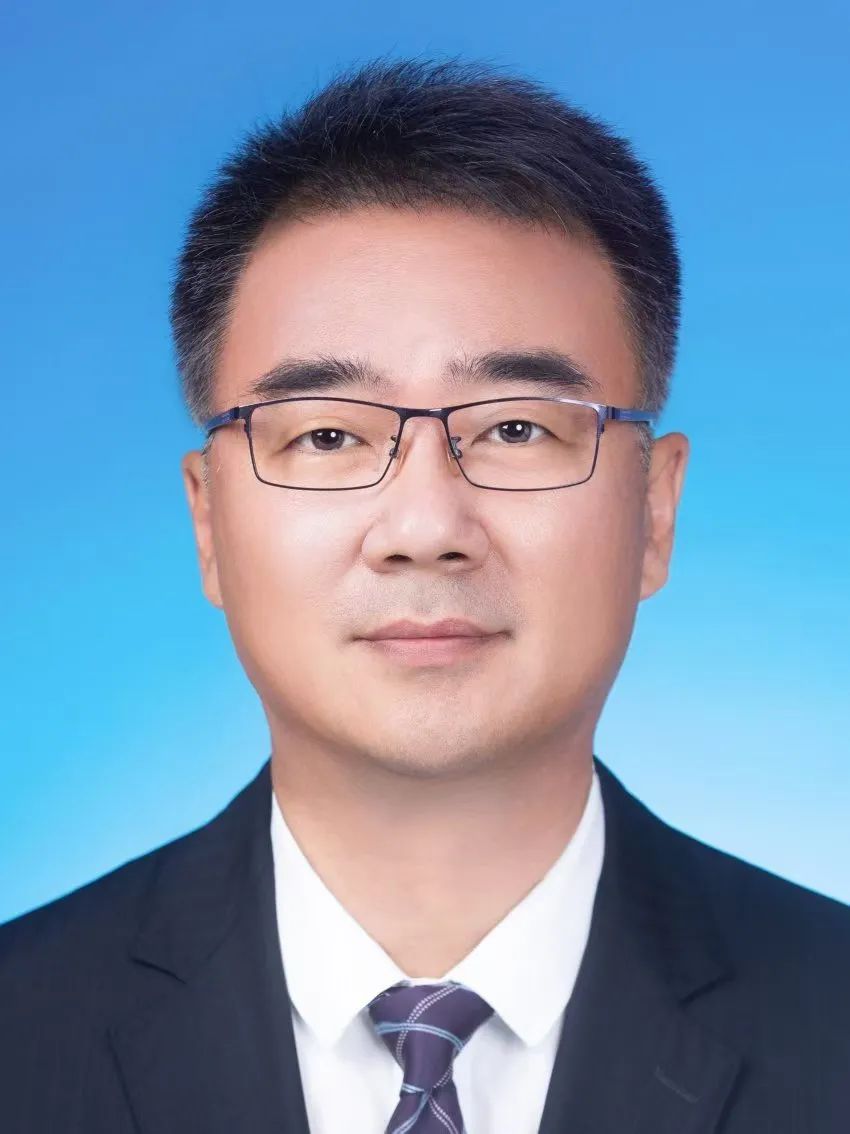
Prof. Jian Liu
Harbin Institute of Technology
Biography: Professor Jian Liu , his research focuses on measurement technology and instruments.He currently holds several prestigious positions, including:
Member of the 8th Discipline Evaluation Group of the State Council Academic Degrees Committee.
Fellow and Standing Council Member of the China Instrument and Control Society.
Standing Council Member of the Chinese Society for Measurement.
Vice Chairman of Measurement Technology Committee.
Editorial Board Members for 5 international journals, including Journal of Microscopy.
Chinese Member for the ISO/TC 213 Committee and international standard Project Leader.
He has served as chief designer in two national major science and engineering projects, and led the National Key Research and Development Program for Scientific Instruments. He has chaired the development of international and national standards, and represented China in the formulation of over 20 ISO standards. His scholarly output comprises two English monographs and nearly 100 academic papers published in top-tier journals such as Nature Biotechnology, Nature Communications, Nano Letters, Small, Nanoscale, PhotoniX, Measurement Science and Technology, Optics Express, and Optics Letters. As the primary contributor (ranked first), he has won one Second Prize of the National Technology Invention Award, one Second Prize of the National Science and Technology Progress Award (passed preliminary review), two First Prizes of the Science and Technology Progress Award from the Chinese Society for Measurement, and one Third Prize of the China Standard Innovation Contribution Award.
Title: Areal Surfaces-Interfaces Three-Dimensional Optical Quantum Microscopy and Its Application
Abstract: In cutting-edge manufacturing, even small surface and interface errors can lead to functional failures or catastrophic accidents. The inadequacy in the completeness and advancement of the relevant metrology system in China has led to poor performance and low yield of cutting-edge manufacturing products. Breaking through the bottleneck of non-contact measurement technology for surfaces- interfaces micro-geometry structures is an urgent strategic requirement to enhance China's core competitiveness and escape the predicament of trading quantity for quality.
This report introduces a novel method for optical quantum microscopy measurement. To address the scale attenuation effect, reflection aliasing effect, and coupling amplification effect in surface and interface measurement, a new principle for quantum orbital angular momentum topological charge transfer microscopy measurement is proposed. A novel quantum dark-field response mechanism with ultra-high sensitivity characteristics has been established, transforming the attenuation relationship between signal intensity and particle size from a sixth-power dependence to a third-power dependence. Consequently, scintillation noise is suppressed, and the signal light is enhanced. Based on this principle innovation, in collaboration with the National Institute of Metrology, the national primary standard device for areal surface and subsurface structural geometric parameters was developed. This achievement is the first in the world to achieve integrated areal traceability of three-dimensional geometric parameters of surfaces and subsurfaces, filling the gaps in the national metrology system for the areal characterization of surface and subsurface parameters. Metrology services have achieved comprehensive coverage across all seven major metrology regions in China.
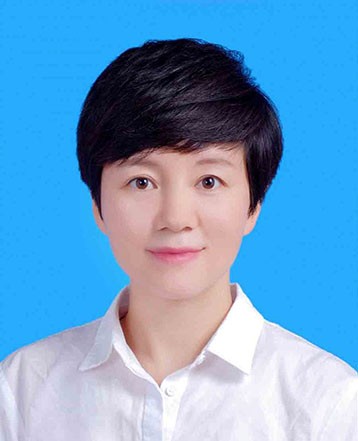
Prof. Huige Di
Xi'an University of Technology
Biography: Professor and Dean of the School of Optoelectronic Science and Intelligent Instrumentation at Xi’an University of Technology, a third-level professor, doctoral supervisor, and recipient of the National High-Level Talent Program (Youth). She was awarded the Shaanxi Youth Science and Technology Award. Her research focuses on meteorological laser remote sensing and cloud physics detection technologies. Over the past five years, she has led 10 national and provincial-level research projects, including four National Natural Science Foundation of China (NSFC) projects (one key project) and participated in one NSFC major research instrument development project. She has published nearly 100 SCI/EI-indexed papers in renowned international journals in optics, remote sensing, and atmospheric detection, obtained 14 national invention patents, and won three provincial/ministry-level awards. She serves as an editorial board member of Acta Optica Sinica and Torrential Rain and Disasters, a youth editorial board member of Journal of Atmospheric and Environmental Optics, standing director of Shaanxi Optical Society, committee member of the Atmospheric Physics Committee of the Meteorological Society, committee member of the Meteorological Education and Training Committee of the Meteorological Society, and committee member of the Environmental Information System and Remote Sensing Committee of the Chinese Society for Environmental Sciences.
Title: Remote sensing technology for cloud macro and micro parameters
Abstract: The micro and macro structure of clouds to some extent determines the development direction and intensity of weather systems. Therefore, studying the vertical structure of clouds is crucial for revealing the structural characteristics and evolution patterns of different weather systems. Xi'an University of Technology has developed a cloud lidar, and based on this, developed a data inversion method combining active and passive remote sensing instruments such as lidar, millimeter-wave cloud radar, and microwave radiometer to achieve remote sensing detection of cloud boundaries, cloud phase state, cloud particle size, and internal temperature and humidity. Multi-source observation experiments have been conducted to study and analyze the macro and micro parameters of "seed-cloud" and "target-cloud" clouds occurring in the airspace above Xi'an, achieving an assessment of the enhancement effect of seed clouds on target clouds.

Sr. Eng. Zhijun Jian
China Oilfield Services Limited
Biography: Zhijun Jian, PhD, Senior Engineer, Technical Expert of China National Offshore Oil Corporation (CNOOC).
Dr. Jian currently works at the Oilfield Technology Research Institute of China Oilfield Services Limited (COSL) as Chief Mechanical Engineer. He mainly engages in research on directional drilling, logging-while-drilling (LWD) and down-hole tools for oil and gas wells.
His research achievement, the “Geosteering Rotary Steerable Drilling System”, received the Grand Prize of the Tianjin Science and Technology Progress Award, and he has been granted 22 Chinese invention patents.
Title: Research and Industrial Application of “Xuanji” Rotary Steerable Drilling System
Abstract: This presentation introduces the “Xuanji” geosteering rotary steerable drilling system series Products developed by China Oilfield Services Limited (COSL). The product family mainly includes:
Welleader – Rotary steerable tool
DWPR – Detectional Wave Propagation Resistivity tool
HSVP – High-rate Shear Valve Pulser
DIM – Directional and Inclination Measurement tool
NBIG – Near-Bit Inclination and Gamma Measurement tool
Pivot – Point-the-bit rotary steerable tool
Gyro-while-drilling measurement tool
The presentation will also cover the system’s industrialization progress and field application performance.

Prof. Shubin Yan
Zhejiang University of Water Resources and Electric Power
Biography:Prof. Shubin Yan, Ph.D. Supervisor, currently serves as Dean of the School of Electrical Engineering at Zhejiang University of Water Resources and Electric Power and Director of a Provincial-Level Laboratory in Zhejiang Province. He earned his Master's and Ph.D. degrees from the State Key Laboratory of Quantum Optics and Quantum Optical Devices at Shanxi University, and completed postdoctoral research at the Department of Precision Instrument, Tsinghua University. He has long been dedicated to pioneering research in precision measurement, quantum sensing, and power equipment detection.
His research achievements in technology transfer are notable: the MEMS sensors he led in developing have generated approximately 200 million RMB in economic benefits, and the chip-scale atomic clocks developed under his guidance achieve performance metrics on par with international advanced levels. In recent years, he has published over 200 academic papers in prestigious international journals such as Applied Physics Letters, Physical Review A, Optics Express, and Scientific Reports, with more than 100 papers indexed by SCI or EI. He holds over 80 authorized national invention patents, 15 of which have been successfully commercialized. He has also contributed to one academic monograph (published by Science Press) and edited two textbooks (published by China Chemical Industry Press).
Prof. Yan was awarded the Shanxi Province Natural Science Second Prize (2022) and the Shanxi Province Technology Invention Third Prize. He has led 6 projects funded by the National Natural Science Foundation of China (NSFC) and over 20 provincial/ministerial-level research projects. He also served as a sub-project leader for one National Key R&D Program of the Ministry of Science and Technology. Furthermore, he has participated in 4 National 973 Pre-Research Programs, 5 NSFC projects, and more than 20 other provincial/ministerial-level projects.
Title:Design and Challenges of Dielectric Materials for Thin-Film Capacitors in Power Pulse Equipment
Abstract: As the core energy storage component in high-power pulse equipment, the performance of film capacitors directly determines the power density and energy density of the pulse power supply. This report focuses on the key challenges and cutting-edge design strategies for the dielectric materials of film capacitors used in such equipment. It begins by outlining the widespread applications of film capacitors in fields of national strategic importance, such as DC power transmission, electromagnetic weapons, and new energy vehicles, pointing out that the development bottleneck lies in the insufficient energy storage density of existing dielectric materials. Currently, advancements in dielectric materials are hampered by inadequate energy storage density. The core issue is the difficulty in simultaneously enhancing both the dielectric constant and the breakdown field strength. Additionally, engineering challenges such as reliance on imported raw materials, performance degradation under high temperatures, and short cycle life persist. To address these challenges, the report analyzes two design approaches: the all-organic polymer multi-layer composite design and the polymer surface inorganic barrier layer design. Through simulations and experimental validation, these designs have been shown to effectively regulate polarization and charge carrier transport, significantly improving the material's energy storage density and thermal stability. Finally, looking ahead, it is emphasized that achieving the next generation of high-performance film capacitors requires full-chain collaborative innovation, spanning from new materials and novel structures to device manufacturing, thereby supporting the independent development of China's high-end power pulse equipment.
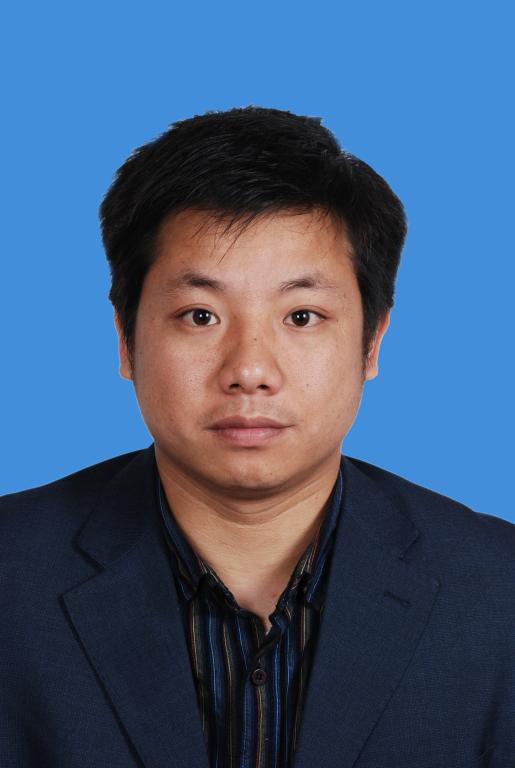
Prof. Hong Huang
Chongqing University
Biography: HongHuang, a professor and doctoral supervisor at Chongqing University, serves as the Vice Dean of the School of Optoelectronic Engineering, Deputy Director of the Key Laboratory of Optoelectronic Technology and Systems of the Ministry of Education, and Director of the Chongqing Experimental Teaching Demonstration Center for Measurement Control Instruments and Optoelectronic Technology. He is also affiliated with the Joint Laboratory of Industrial Intelligent Detection and Visual Measurement. Currently, he holds the positions of Senior Member of IEEE, Academic and Technical Leader in Chongqing, Member of the Teaching Guidance Committee for Undergraduate Education in Chongqing Universities, Special Expert of the Chongqing Civil Air Defense, and Head of the National First-Class Undergraduate Program and Chongqing's "Big Data and Intelligentization" Characteristic Program. His research primarily focuses on target detection and recognition, intelligent interpretation of remote sensing images, and spectral analysis instruments. In recent years, he has led over 30 projects, including key projects under the National Key R&D Program, the National Natural Science Foundation of China, and major R&D projects for key common technologies in Chongqing's key industries. He has published more than 100 SCI academic papers, seven of which have been recognized as ESI Highly Cited Papers. He has been consecutively listed in the "World's Top 2% Scientists" for three years and has received honors such as the Second Prize of the China Machinery Industry Science and Technology Progress Award and the Second Prize of the Chongqing Science and Technology Progress Award. Under his supervision, doctoral students have received awards, including the National Outstanding Doctoral Dissertation Award from the China Instrument and Control Society and Chongqing Outstanding Doctoral/Master's Thesis Awards, on more than 10 occasions.
Title: Intelligent Sensing Technology and Its Applications in the Petroleum and Petrochemical Industry
Abstract: Intelligent sensing technology, as a pivotal means driving the intelligent transformation of the petroleum and petrochemical industry, is continuously breaking through safety and efficiency bottlenecks via the integration of multiple advanced technologies. This presentation showcases a comprehensive condition monitoring solution that covers critical processes including oil and gas storage/transportation, refining, and chemical production.
The main content encompasses a series of technological research advances, ranging from: acoustic-based detection and localization of pipeline natural gas leaks; distributed optical fiber sensing for multi-parameter perception of strain, temperature, and vibration; adaptive pipeline vibration absorption and control utilizing the magnetorheological effect; industrial computed tomography (CT) for non-destructive inspection and visual detection of internal equipment defects; to AI machine vision and high-precision measurement technologies empowering key links in the petroleum and petrochemical sector.
The report will further explore how these technologies can be synergistically integrated and applied, analyzing their future development trends. It aims to provide a forward-looking technical blueprint for building a safer, more efficient, and more resilient operational system for the industry.